About Ground Based Telecom Towers
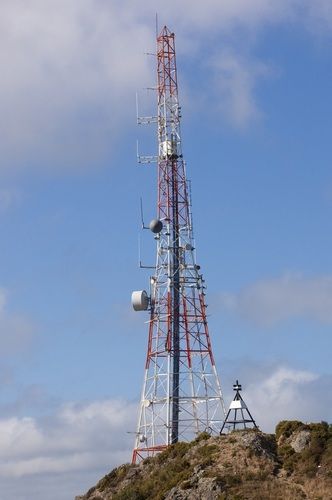
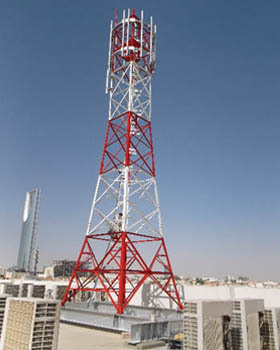
We are reckoned among clients for manufacturing and exporting high quality Ground Based Telecom Towers. Widely used in telecommunication sector for smooth and fast transmission. We offer these Ground Based Towers in different ratings and specifications in order to meet our clients varied needs. We use supreme quality materials to manufacture these Ground Based Telecom Towers in strict tandem with industry standards.
Features:
- Easy installation
- Continuous transmission
- Wind resistance
Superior Structural Stability and Seismic ComplianceGBT-Standard towers are meticulously designed to withstand harsh environmental conditions, including high winds up to 180 km/h and seismic activities in Zones IV and V. The use of high-grade galvanized steel, robust base plates (up to 40 mm thick), and high-tensile bolts (grades 8.8/10.9) ensures strength, reliability, and long-term service even in demanding locations.
Comprehensive Safety and Maintenance FeaturesSafety is prioritized through integrated lightning protection, aviation obstruction lighting, and a fully compliant grounding system. For seamless operations, maintenance access is facilitated with cat ladders and rest platforms, enabling technicians to work safely and efficiently at various heights. Dual anti-corrosive paint further enhances longevity, defending against Indias diverse weather conditions.
Customizable and Modular Design for Flexible DeploymentEach tower is customizable in dimensions and configuration, with options for 3-legged or 4-legged lattice types to fit site-specific needs. The modular design supports rapid installation and easy scalability, allowing for antenna mounts, cable entry provisions, and integrated racks. These towers are built to support a variety of cellular and wireless applications, ensuring optimal coverage and performance.
FAQs of Ground Based Telecom Towers:
Q: How does the GBT-Standard tower ensure resistance to extreme wind and seismic conditions?
A: The tower is engineered to withstand wind speeds up to 180 km/h and complies with seismic design standards for Zones IV and V, ensuring stability during earthquakes and storms. High-grade galvanized steel, robust base plate thickness, and high-tensile bolts contribute to its structural integrity in harsh conditions.
Q: What process is followed for surface protection and corrosion resistance?
A: Each tower undergoes hot dip galvanization as per IS 4759/ASTM A123, followed by the application of dual anti-corrosive paint for enhanced protection against environmental corrosion, ensuring a service life of over 25 years with proper maintenance.
Q: When should maintenance be conducted, and how is access provided for servicing?
A: Routine inspections and maintenance should be scheduled according to telecom standards or at least annually. The tower features a cat ladder and rest platforms, providing safe and easy access for technicians to perform checks and repairs at any height.
Q: Where can the GBT-Standard towers be installed?
A: These towers are designed for ground mounting on a sturdy foundation, suitable for urban, rural, and high seismic risk areas across India. Their customizable dimensions allow tailoring to specific site and coverage requirements.
Q: What are the benefits of modular construction in telecom towers?
A: Modular construction enables rapid, efficient installation, and easy scalability for future equipment upgrades or site expansions. It simplifies logistics and assembly, reducing installation time and costs on site.
Q: How does the tower support diverse telecom equipment and connectivity needs?
A: With customizable interface types for antennas, cables, and entry provisions, the tower supports multiple antennas, radio units, and integrated racks for wireless and wired connectivity. It operates within the 700 MHz to 3.5 GHz spectrum and includes provisions for battery and generator backup to maintain continuous operation.
Q: What usage scenarios are ideal for these towers, and what is the expected coverage area?
A: Ideal for telecom signal transmission, cellular network infrastructure, and wireless links in line-of-sight deployments, the towers can cover up to a 30 km radius, depending on site elevation and antenna configuration.






 engineeringworksroy@gmail.com




 Send Inquiry

 Send Inquiry

